Unbothered and Cashing Out: The Secret Economy of Pretending You Don't Care

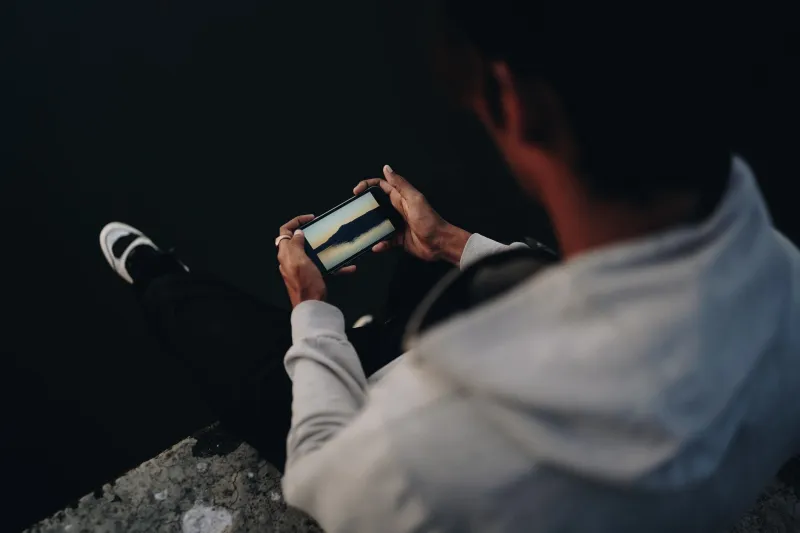
There's a specific kind of person dominating your For You page right now. They're slumped in a hoodie. Their delivery is flat. Their humor is so dry it's basically a fire hazard. They film themselves doing absolutely nothing interesting and caption it something like "lol whatever" — and then they pull 2 million views before lunch.
Welcome to the Performative Apathy Economy, where seeming like you couldn't care less is, paradoxically, the hardest you'll ever work.
The Aesthetic of Not Trying (Which Takes a Lot of Trying)
Let's be real about what's actually happening here. The TikTok creator who looks half-asleep while going viral? They've watched their analytics. They know their posting window. They've A/B tested their tone. The brand that runs ads with deliberately ugly graphics and a tagline that says "yeah, it's a product, whatever" — they've got a full creative team behind that studied nonchalance.
This is the central paradox of apathy as a brand identity: it requires enormous effort to appear effortless. And Gen Z, more than any generation before them, has turned that paradox into a full-blown economic model.
The "I don't care" aesthetic didn't come from nowhere. It's a direct response to the relentless optimization culture of the millennial influencer era — the ring lights, the gratitude journals, the hustle mantras plastered over sunrise photos. That whole world started to feel exhausting and fake, and the cultural immune system kicked in. Disaffection became the antidote. Looking like you're above it all became the new aspirational mode.
Except — and here's where it gets messy — being above it all is still a performance. It's just a different costume.
The Anti-Influencer Industrial Complex
Some of the most followed creators right now have built their entire identity around not being an influencer. They mock brand deals while accepting brand deals. They post "I hate posting this" before posting something carefully edited. They've mastered the art of the self-aware sellout, which turns out to be just as sellout-y as the original version, only with better irony coverage.
Take the whole wave of "de-influencing" content that blew up a couple years back. Creators telling you not to buy things — often while being paid by other brands to redirect your spending. The aesthetic was anti-consumption. The function was still consumption. The audience mostly knew this and watched anyway, because the vibe was right even if the logic was busted.
That's the thing about performative apathy: it doesn't actually need to be logically consistent. It just needs to feel authentic. And in 2025, "feeling authentic" and "being authentic" are two completely different products with wildly different price points.
Dark Humor as a Business Strategy
Nothing codes "I don't care" harder than dark humor, and brands have figured this out in a big way. Wendy's Twitter was the early case study — a fast food chain roasting its own customers and competitors with a deadpan savagery that felt almost hostile. It worked because it felt like the opposite of corporate. It felt like someone who didn't care about the consequences.
Of course, it was a very deliberate, very expensive social media strategy. But the feeling of recklessness was the product.
Now that playbook is everywhere. Brands are leaning into self-deprecation, absurdist humor, and a kind of aggressive indifference toward traditional marketing polish. Liquid Death built an entire beverage empire on the premise that caring about hydration is for losers — so here's water in a tallboy can with a skull on it, marketed like a metal album. The product is water. The thing they're actually selling is a very specific attitude.
And it's working. Because attitude, it turns out, is one of the most monetizable things on the market right now.
What Are We Actually Performing?
Here's the uncomfortable question underneath all of this: what does it mean that an entire generation's most authentic-feeling expression is a pose?
It's easy to be cynical about it — and honestly, being cynical about Gen Z's cynicism is its own kind of ironic loop that could go on forever. But there's something worth taking seriously in why apathy became the dominant youth aesthetic in the first place.
Growing up terminally online, in the middle of a climate crisis, during a pandemic, watching institutions fail in real time — there's genuine emotional logic to adopting a posture of detachment. If everything is a disaster and nothing you do seems to matter, "I don't care" stops being laziness and starts being a coping mechanism. The irony is a shield. The flatness is armor.
The problem is that the market got to it first. The moment a genuine emotional response becomes an aesthetic, it becomes a product. And once it's a product, it gets hollowed out. The apathy that started as a real reaction to real exhaustion is now a vibe that brands can license.
Which means Gen Z is now in the position of having their most authentic emotional posture turned into a marketing tool — and the only way to respond to that is probably more apathy. It's turtles all the way down.
The Unbothered Brand Playbook
If you want to understand how deep this goes, look at how brands are actively recruiting for the aesthetic. The casting brief isn't "enthusiastic spokesperson" anymore. It's "someone who looks like they almost didn't show up." Energy drink brands want athletes who seem mildly annoyed to be there. Fashion campaigns are full of models who look like they'd rather be asleep. The whole visual language of aspirational marketing has shifted from bright-eyed ambition to studied disengagement.
Even job listings in creative industries have started adopting the tone. "We're not like other companies" used to mean ping pong tables. Now it means the brand voice is lowercase and vaguely nihilistic.
The economy of not caring has gotten so sophisticated that there are now entire agencies specializing in helping corporations sound like they don't care. Which is a sentence that should probably make everyone stop and stare at the wall for a minute.
So What's Real?
Maybe nothing. Maybe that's fine. Maybe the lesson of the Performative Apathy Economy is that authenticity was always a construction, and Gen Z is just the first generation to say that part out loud while still playing the game.
Or maybe the real move — the one that's actually subversive, actually unmonetizable — is to care loudly and without irony about something, anything, and refuse to package it neatly for anyone's algorithm.
But that sounds exhausting. And honestly? Whatever. You do you.
(See what we did there.)