Dead Famous, Trending Now: How We Turned Grief Into a Group Project
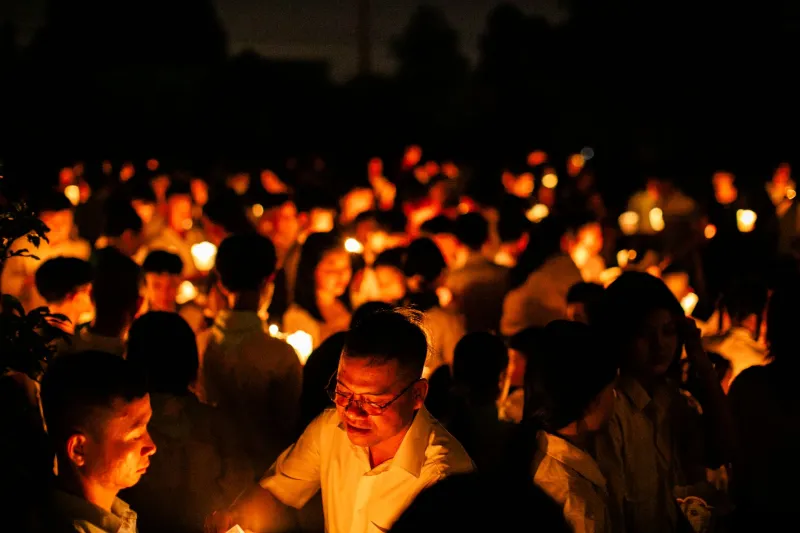
Somebody famous dies on a Tuesday afternoon, and by Tuesday evening your entire feed looks like a candlelight vigil held inside a smartphone. The tributes roll in. The black-and-white photos. The quote cards. The "I didn't know them personally but" posts that somehow clock three thousand likes before midnight. And somewhere in the middle of all that noise, a genuine question starts to surface: is anyone actually grieving, or are we all just... performing it?
This isn't a callout. It's a reckoning. Because the performative grief economy is real, it's profitable, and most of us are participating in it without even clocking that we signed up.
The Moment Death Became a Content Opportunity
Let's be honest about how this works mechanically. A public figure dies — musician, actor, athlete, reality star, doesn't matter — and within minutes, platforms algorithmically reward anyone who posts about it. Grief content gets reach. Tribute posts get shares. "Rest in power" stories get saved. The platform doesn't care whether you sobbed in your car or just saw the push notification while scrolling through takeout menus. Engagement is engagement. Emotion, real or manufactured, drives the machine the same way.
What's wild is how quickly we've all internalized this logic. We now instinctively know that grief is postable. That loss, framed correctly, is relatable content. And relatability, in the attention economy, is the whole game.
There's even a template at this point. You lead with the memory — even a thin one. You drop the artist's best lyric, or the actor's most iconic line. You close with something that gestures toward collective loss: "We're all feeling this one." Hit post. Watch the numbers climb. Feel... something. Maybe grief. Maybe just the dopamine hit of being seen grieving.
The Sliding Scale of Authenticity
Here's where it gets genuinely complicated, because not all public mourning is fake. Some of it is devastatingly real. When Prince died in 2016, people who had never met him wept in the streets of Minneapolis. When Kobe Bryant's helicopter went down, entire cities felt the kind of gut-punch that doesn't care about algorithms. Parasocial relationships — the one-sided bonds we build with public figures over years of music, movies, and social media — are psychologically legitimate. Grief researchers have confirmed this. You can genuinely mourn someone you never met.
But somewhere between genuine parasocial grief and posting a black square because everyone else is, there's a massive gray zone where most of us actually live. And that gray zone is where the performative grief economy does its best business.
The tell is usually in the timing. Real grief is messy and often private, at least initially. Performative grief is fast, polished, and suspiciously on-brand. The influencer who posts a tearful Story about a tragedy they had zero connection to — complete with the right lighting and a link to their merch in the bio — isn't mourning. They're capitalizing. The distinction matters, even when it's uncomfortable to name.
Collective Trauma as Content Calendar
It's not just celebrity deaths, either. Mass shootings. Natural disasters. Racial violence. Every collective trauma now comes with an unofficial content cycle attached to it. Day one: shock posts and breaking news shares. Day two: the "we need to talk about" think-pieces and infographic carousels. Day three: the accountability callouts for anyone who didn't post. By day five, the algorithm has moved on, and so has everyone's feed.
What this cycle does — and this is the part that should genuinely disturb you — is flatten the difference between awareness and action. Posting about a tragedy feels like doing something. It registers emotionally as participation. But the shooting victims don't care about your Story. The families displaced by the hurricane aren't watching your Reel. The grief performance, however sincere it might feel in the moment, often substitutes for the harder, slower, less Instagrammable work of actually giving a damn over time.
There's a term for this in psychology: slacktivism's emotional cousin. You get the moral credit of mourning without the sustained cost of engagement. The platform gets the content. The tragedy gets a 48-hour news cycle. And then everyone moves on to the next thing.
What We Lose When Grief Becomes a Metric
The deeper cost of the performative grief economy is what it does to our capacity for private feeling. When every emotional experience becomes potentially shareable, we start to process emotions through the filter of how they'll land publicly. We ask, before we've even finished crying: would this make a good post? That's not a neutral question. It fundamentally changes the grief itself.
Some therapists are starting to flag this as a genuine mental health concern — not just the performative element, but the way constant public mourning creates a kind of emotional numbness. When you're exposed to curated grief content every single day, your nervous system eventually starts treating it like background noise. Real tragedy becomes aestheticized. Loss becomes a vibe. And your actual capacity for empathy — the slow, inconvenient, non-photogenic kind — quietly atrophies.
There's also the accountability trap. Social media grief has created this unspoken expectation that silence equals indifference. If you don't post about the tragedy, you must not care. Which means people who do care, but prefer to process privately, or donate quietly, or just sit with their feelings without broadcasting them, get flagged as complicit. The performance has become the proof of feeling. Which is, if you think about it, completely backwards.
Mourning Without the Camera
None of this means you're a bad person for posting a tribute. It means the system is designed to extract emotional content from you whether your grief is real or not, and you should probably be aware of that before you hit share.
The more interesting question is what grief would look like if it weren't optimized for engagement. What if you sat with the loss for a minute before you posted about it? What if you donated to the cause instead of sharing the infographic? What if you called the friend you've been meaning to check in on, instead of watching everyone else perform their sadness in real time?
Grief used to be a private architecture — something you built slowly, with the people closest to you, over time. Now it's a public event with a comments section. And the comments section, as we all know, is never the place where the real stuff happens.
The real stuff happens when nobody's watching. When the phone is down. When there's no metric attached to the feeling.
That's the grief the algorithm can't monetize. Which is probably why it's the only kind still worth having.