Healing Is the New Hustle — and It's Just as Toxic
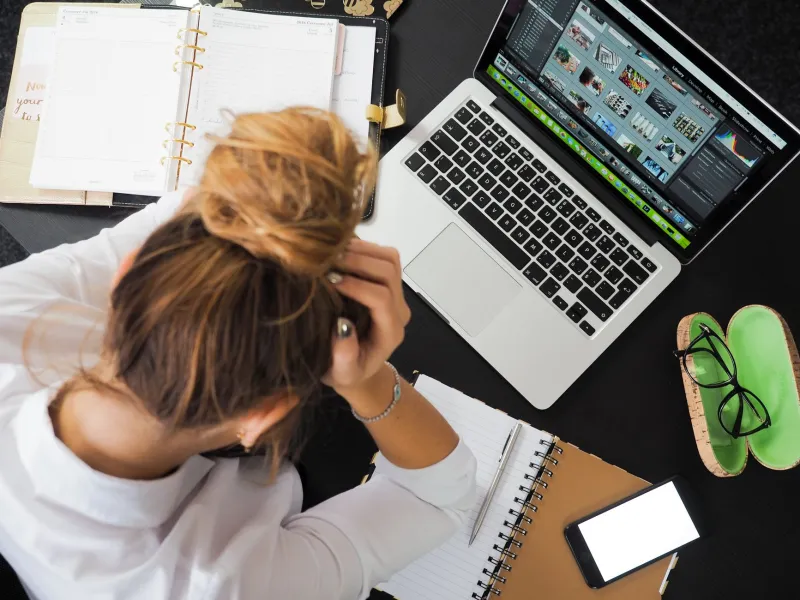
Somewhere between the third cold plunge video and the fourteenth reminder to "protect your peace," something went sideways. What started as a genuine cultural pushback against burnout has quietly shape-shifted into its own flavor of exhaustion — one that comes with a jade roller, a $14 adaptogen latte, and a very curated Instagram grid.
Welcome to performative wellness: the era where taking care of yourself became the most stressful job you never applied for.
The Glow-Up That Never Ends
Let's trace it back. The wellness boom didn't appear out of nowhere. After years of hustle culture glorifying 5 a.m. wake-ups and "sleep when you're dead" energy, a correction was overdue. People were tired — genuinely, bone-deep tired — and they needed language and tools to deal with it. Enter therapy speak, mindfulness apps, and the mainstreaming of mental health conversations. Good things, mostly. Necessary things.
But the wellness industry — now worth over $5.6 trillion globally, with the US leading the charge — saw an opening. And it did what every industry does when it smells money: it scaled, packaged, and sold the thing back to you at a markup.
Now "rest" has a product line. "Boundaries" are a brand identity. And "healing" is a content vertical with its own aesthetic.
Your Morning Routine Is Judging You
Here's where it gets dark. The pressure to optimize your wellness has started to mirror the exact productivity anxiety it was supposed to replace. Except instead of tracking your output at work, you're tracking your HRV scores, your sleep cycles, your daily steps, your water intake, your cortisol levels, and — God help you — your "nervous system regulation."
There are apps for your meditation. Apps to rate the quality of your journaling. Wearables that tell you whether you "recovered" well enough to deserve your workout. And if you're not doing all of this before 8 a.m., some corner of the internet will quietly imply you're failing at being a person.
The biohacking crowd — once a niche Silicon Valley obsession — has gone fully mainstream. Bryan Johnson spending $2 million a year to reverse his biological age is the extreme end, but the logic trickles down. You should be optimizing. You should be upgrading. You should be, at all times, becoming a better version of yourself. The implication being, of course, that who you currently are isn't quite enough.
Sound familiar? It should. That's just hustle culture in a linen set.
Posting the Process
The social media layer makes everything worse — and more complicated. Because when wellness becomes content, the motivation to actually feel better gets tangled up with the motivation to look like you're feeling better.
There's a whole genre of this now. The "healing era" post. The "I've been doing the work" caption. The gym selfie with the therapy quote overlay. None of it is inherently fake — people are genuinely trying, genuinely struggling, genuinely proud of their progress. But the performance of it creates a feedback loop where the ritual matters less than the documentation of the ritual.
You didn't really meditate if you didn't post about it. Your boundary isn't real until it's a carousel. Your breakdown becomes a "raw and honest moment" and your breakthrough becomes your most-saved reel of the month. The line between processing and performing collapses entirely.
And Gen Z — already navigating a world of economic anxiety, climate dread, and social fragmentation — is absorbing all of this in real time, often without the critical distance to see it for what it is.
Burnout From Trying Not to Burn Out
The cruel irony at the center of all this is that the relentless pursuit of wellness is itself a source of stress. Clinical psychologists have a term for it: "wellness anxiety." The fear that you're not doing enough to take care of yourself. That your self-care routine isn't optimized. That you're falling behind on your healing.
You can be exhausted from your rest practice. Stressed about your stress management. Anxious about whether you're doing enough to address your anxiety. It's recursive in the most nightmarish way.
And the industry profits from every loop. Because if you ever feel like you've arrived — like you're well, actually — there's nothing left to sell you. So the goalpost keeps moving. New supplements, new modalities, new diagnoses, new "root causes" to address. The wellness industry needs you to stay slightly unwell.
The Class Thing Nobody Wants to Talk About
Here's another layer that gets conveniently glossed over in the "prioritize yourself" content: access. The wellness aesthetic is coded as universal — everyone deserves to thrive! — but the price tags are not.
Cryotherapy sessions, Oura rings, therapy copays, organic groceries, Pilates memberships, infrared saunas, and yes, those $14 adaptogen lattes — this stuff adds up fast. For a lot of young Americans drowning in student debt, working gig jobs without benefits, or simply trying to make rent, the "best version of yourself" comes with a barrier to entry that nobody in the wellness space is particularly eager to acknowledge.
So you get a weird two-tier system: the people who can genuinely afford to optimize, and the people who can only afford to perform optimizing. Buying the aesthetic without the access. Following the routine content without the resources. And then feeling like failures when the gap between what they're doing and what they "should" be doing refuses to close.
What Actual Rest Looks Like
Here's the radical proposition: maybe wellness doesn't look like anything. Maybe it's not photogenic. Maybe it's watching trash TV without logging it as "intentional rest." Maybe it's skipping the journaling prompt. Maybe it's canceling your meditation app subscription and just... sitting in your car for ten minutes doing nothing.
The people pushing back hardest against performative wellness aren't anti-self-care. They're anti-optimization. There's a difference between genuinely tending to yourself and treating yourself like a startup that needs to hit KPIs every quarter.
Rest that needs an audience isn't rest. Healing that needs a highlight reel isn't healing. And a "best version of yourself" that's defined by an industry trying to sell you something is just a moving target dressed up in soft neutrals and affirmations.
The actual work — the unglamorous, unposted, deeply unsexy work of figuring out who you are and what you need — doesn't have a morning routine. It doesn't have a brand deal. And it definitely doesn't come with a referral code.
Maybe that's where you start.