Designed to Make You Feel Like You're Missing Out: The Dark Science Behind Your Endless Scroll
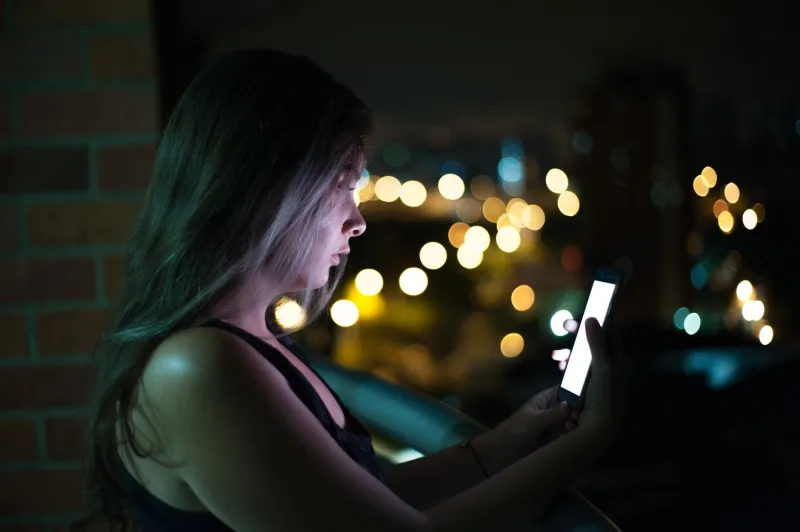
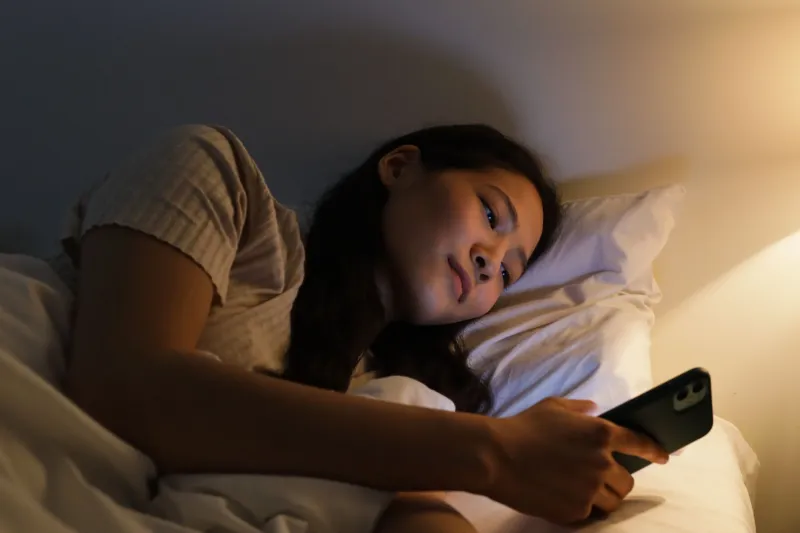
You open Instagram at 11:47 PM. You weren't planning to. You were literally mid-thought about something else — maybe you were about to text someone back, maybe you were two seconds from falling asleep. But here you are, thumb moving on autopilot, watching someone's rooftop birthday party in a city you don't live in, surrounded by people you'll never meet, having a night that somehow feels like it should've been yours.
That feeling? That low-grade, chest-tightening sense that the world is happening somewhere just out of your reach? That's not a coincidence. That's a feature.
The Feed Was Never About Keeping You Informed
Let's get something straight: social media platforms are not communication tools with a monetization problem bolted on. They are attention extraction machines with a communication veneer. The distinction matters, because it changes how you understand everything you experience on them.
When former Google design ethicist Tristan Harris started publicly calling out the industry — eventually helping launch the Center for Humane Technology — he described the fundamental mechanic as a "slot machine in your pocket." Variable reward schedules, the same psychological principle that makes gambling addictive, are baked into the pull-to-refresh gesture, the notification badge, the algorithmic feed that never quite shows you everything in order. You don't know what you're going to get when you open the app. That uncertainty is the hook.
But the slot machine metaphor, as useful as it is, doesn't capture the specifically social dimension of what's happening. Because the thing these platforms are really exploiting isn't your love of novelty. It's your need to belong.
FOMO as a Product Strategy
FOMO — fear of missing out — got diagnosed as a cultural phenomenon around the early 2010s, right when smartphone adoption was exploding and Instagram was becoming the dominant visual language of American youth culture. Researchers at the University of Essex published one of the first academic treatments of it in 2013, linking it directly to social media use and to lower baseline satisfaction with life.
What didn't make the headlines at the time was that the platforms already knew. Internal research at Facebook — now surfacing through whistleblower disclosures and congressional testimony — showed that the company understood its products were generating social comparison anxiety, particularly in teenage girls, and continued optimizing for engagement anyway. Because FOMO, it turns out, is extraordinarily good for business.
A user who feels like they're missing something keeps scrolling. A user who feels inadequate next to their peers is primed to engage — to post something, to buy something, to perform something that might close the gap. The anxiety isn't a side effect. It's the engine.
The algorithmic systems that decide what you see are trained on engagement signals, and nothing drives engagement like emotional activation. Envy activates. Outrage activates. The creeping sense that everyone else is thriving while you're standing still? That activates hardest of all.
Connection Theater
Here's the cruelest part of the design: the platforms give you just enough social contact to make you feel like you're connected, while systematically replacing the kind of connection that would actually satisfy you.
A like is not love. A comment is not a conversation. Watching someone's story is not the same as sitting across from them at a diner booth at midnight when something's actually wrong. But the brain — specifically the parts of it that evolved to track social belonging long before smartphones existed — doesn't always know the difference in the moment. You get a dopamine nudge when someone responds to your post. It registers as social reward. And then it fades, faster than real connection would, leaving you reaching for the next hit.
Dr. Vivek Murthy, the U.S. Surgeon General, issued a landmark advisory in 2023 calling loneliness an epidemic in America, with social media explicitly named as a contributing factor in adolescent mental health decline. He followed it with a formal call for warning labels on social platforms — the kind we put on cigarettes. The comparison isn't accidental. The product is engineered to create compulsive use while degrading the underlying need it claims to meet.
You're not more connected because you have 1,200 followers. You might actually be less connected, because the time and emotional energy you're spending performing a social life online is time you're not spending building one.
Infinite Scroll and the Removal of Natural Stopping Points
Aza Raskin, the designer who invented infinite scroll, has publicly stated that he regrets it. The original intent was user convenience — no pagination, no clicking "next page." What it became was the elimination of every natural moment where a person might think: okay, I'm done now.
Physical media has stopping points. A magazine ends. A TV show has credits. A newspaper runs out of pages. These aren't just logistical realities — they're psychological off-ramps. Infinite scroll removed them deliberately, because stopping is bad for time-on-site metrics, and time-on-site is what gets sold to advertisers.
The result is a medium that mimics the experience of a task without ever providing the satisfaction of completion. You scroll. Nothing resolves. You scroll more. The unfinished loop keeps you in place.
Combine that with algorithmic personalization that learns your specific psychological vulnerabilities — what content spikes your anxiety, what triggers your insecurity, what makes you feel seen just enough to stay — and you have a system of almost surgical precision pointed directly at your weakest spots.
So What Do You Actually Do With This?
Knowing the machine doesn't automatically free you from it. That's the uncomfortable truth that a lot of digital wellness content glosses over with a list of tips about screen time limits and grayscale mode. The platforms are billion-dollar systems designed by some of the most sophisticated behavioral engineers on the planet. A 30-minute timer isn't going to neutralize that asymmetry.
What it can do is change your relationship to the feeling. When the FOMO hits — when you're watching someone else's highlight reel at midnight and that familiar hollow feeling starts spreading — you can name what's happening. This is a designed response. This is the product working as intended. That doesn't make the feeling less real, but it does mean you don't have to take its conclusions at face value.
The party on your screen probably wasn't as good as it looked. The person posting from it probably checked their phone more than they'd like to admit. And the version of your life that exists in your feed is no more real than theirs.
You're not missing out. You're being made to feel like you are. There's a difference — and one of them is worth billions of dollars a year to make sure you never quite figure it out.